
-
 English
-
 Español
-
 Português
-
 Русский
-
 Français
-
 日本語
日本語
-
 Deutsch
-
 Tiếng Việt
-
 Italiano
-
 Nederlands
-
 ไทย
ไทย
-
 Polski
-
 한국어
한국어
-
 Svenska
-
 Magyar
-
 Bahasa Melayu
-
 বাংলা
বাংলা
-
 Dansk
Dansk
-
 Suomi
Suomi
-
 हिन्दी
-
 Filipino
-
 Türkçe
-
 Gaeilge
-
 العربية
-
 Bahasa Indonesia
-
 Norsk
Norsk
-
 اردو
اردو
-
 Čeština
-
 Ελληνικά
-
 Українська
-
 Basa Jawa
-
 فارسی
فارسی
-
 தமிழ்
தமிழ்
-
 తెలుగు
-
 नेपाली
-
 မြန်မာ
-
 Български
-
 ລາວ
ລາວ
-
 Latina
-
 Қазақша
-
 Euskera
-
 Azərbaycan
-
 Slovenčina
-
 Македонски
-
 Lietuvių
-
 Eesti
Eesti
-
 Română
-
 Slovenščina

How does a road guardrail enhance its overall impact resistance using high-strength metal materials?
2026/07/21
As urban road construction continues to evolve towards safety, intelligence, and high quality, road guardrails are no longer just simple barriers, but a crucial component of ensuring traffic safety. In environments with high-speed vehicle traffic and continuously increasing traffic volume, guardrails need higher impact resistance, structural stability, and long-term durability. Road guardrail s, constructed with high-strength metal materials, utilize scientific structural design, superior galvanizing processes, and modular installation methods. They not only effectively absorb the impact of vehicle collisions but also withstand complex outdoor environments over the long term, providing more reliable protection for road traffic safety.

1. High-strength metal materials enhance overall impact resistance
Road guardrail s use high-strength metal materials such as high-quality carbon steel as their main structure, and undergo hot-dip galvanizing treatment, giving the material both excellent mechanical strength and corrosion resistance. Compared to ordinary metal materials, high-strength steel has higher tensile strength and deformation resistance. When a vehicle collision occurs, the guardrail can withstand a larger impact load, reducing structural damage caused by severe impacts.
Meanwhile, the high-strength metal material effectively disperses the impact energy generated during a collision, reducing localized stress concentration and maintaining the overall stability of the guardrail. This provides continuous and effective protection for vehicles, further enhancing road safety.
2. Scientific Structural Design Enhances Collision Buffering
In addition to the high strength of the material itself, Road Guardrail employs an optimized structural design. The corrugated guardrail panels, posts, and connecting components form a stable overall force-bearing system that collectively absorbs and disperses impact forces during a vehicle collision, reducing the instantaneous reaction force on the vehicle.
This scientific structural design not only improves the guardrail's impact resistance but also guides vehicles during a collision, gradually restoring them to their normal driving direction, reducing the risk of rollover or running off the road, and providing safer buffer protection for drivers.
3. Galvanizing and Powder Coating Processes Extend Structural Lifespan
Road Guardrail is exposed to complex environments such as sunlight, rain, salt spray, and air pollution for extended periods; therefore, durability is equally important. The product employs a hot-dip galvanizing process, forming a dense zinc layer on the metal surface, effectively isolating moisture and air and enhancing overall rust resistance.
Furthermore, the surface undergoes outdoor-grade electrostatic powder coating treatment, further strengthening its resistance to ultraviolet radiation, acids, alkalis, and weathering environments. This dual protection not only maintains the long-term aesthetic appearance of the guardrail but also prevents material strength degradation due to corrosion, ensuring the guardrail maintains stable and reliable impact resistance.
4. Modular Installation Improves Maintenance Efficiency and Adaptability
To meet the construction needs of different road environments, Road Guardrail adopts a standardized modular design, allowing for rapid assembly and disassembly of components. Installation can be completed during construction using bolts and other connection methods, effectively shortening the construction cycle and minimizing impact on traffic.
When individual guardrails are damaged by impact, only the damaged modules need to be replaced to restore normal use, eliminating the need for complete removal and significantly reducing maintenance costs. Simultaneously, the guardrails can be configured with different heights, strengths, and color schemes according to different road grades, and combined with reflective markings, anti-glare panels, and other functional modules to continuously improve the overall road protection effect.
With the continuous upgrading of modern transportation infrastructure, Road Guardrail has evolved from a traditional barrier facility into an important piece of transportation equipment integrating safety protection, durability, rapid maintenance, and aesthetic design. Through a combination of high-strength metal materials, a scientifically designed impact-resistant structure, and a dual protective process of galvanizing and powder coating, Road Guardrail can maintain stable and reliable protection capabilities in complex road environments, providing safer, more durable, and more efficient overall solutions for urban roads, highways, and various transportation facilities.
Latest News
-
How does a road guardrail enhance its overall impact resistance using high-strength metal materials? 2026/07/21
As urban road construction continues to evolve towards safety, intelligence, and high quality, road guardrails are no longer just simple barriers, but a crucial component of ensuring traffic safety.
-
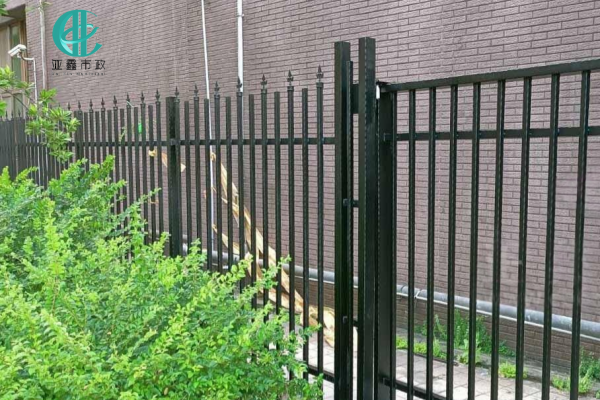 Ecological Perimeter Fence, Safe And Beautiful! 2026/01/30
In the field of modern space planning and security management, Perimeter Fence is no longer a simple...
-
 Classic Triple-Roof Galvanized Steel Perimeter Fence: Defining the New Standard for Modern Protection 2026/01/30
In today's outdoor space design, which pays attention to the integration of safety, privacy and aest...
-
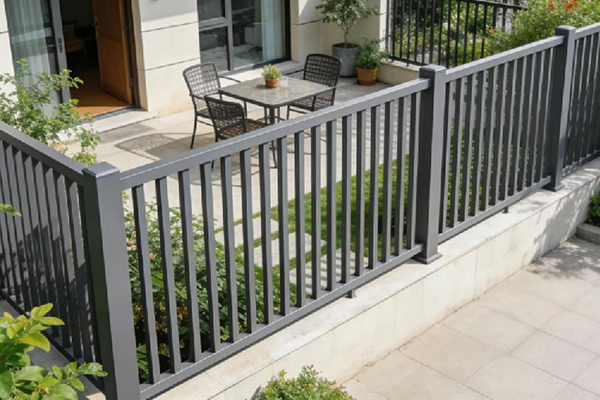 2026 Aluminum Alloy & Zinc Steel Guardrail Purchasing Guide: A Cost-Effective Solution For Essential Scenarios 2026/01/30
With the increasing demand for residential yard protection and municipal public facility constructio...